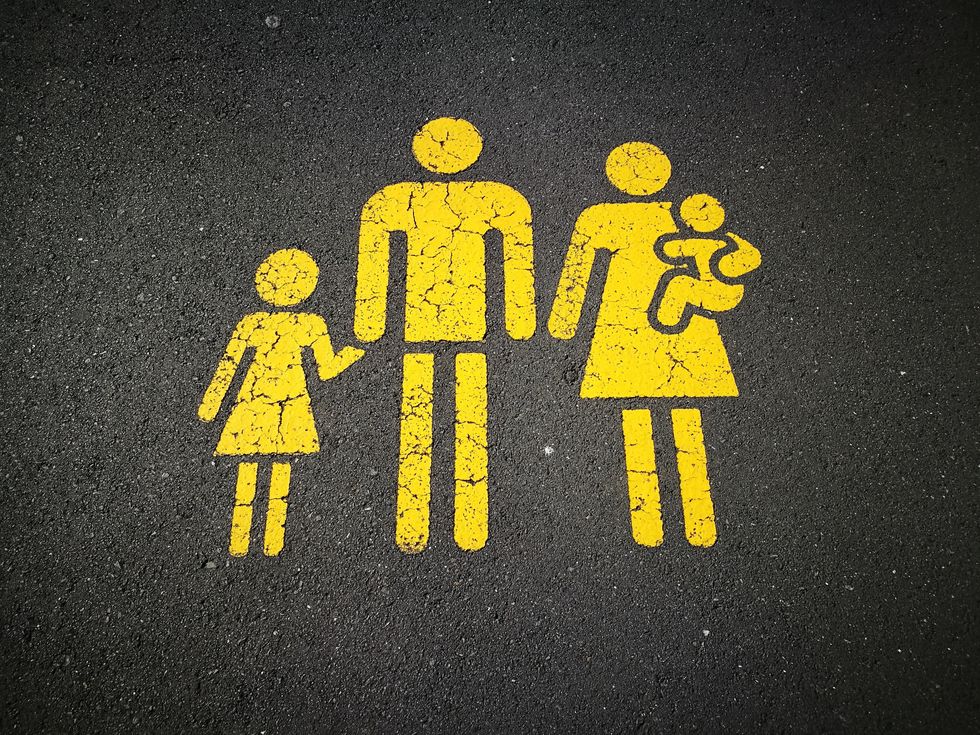
“The Golden Girls” was onto something long afore the rest of society caught on. The hit TV show laid the nuclear family paradigm to rest — an reliable example of a nontraditional household.
While four girlfriends living together — from a multi-generational home — may not seem uncommon to today’s generations, it was far from the norm just a pair of decades ago. Yet, societal changes ultimately altered our communication of a structured “family” life.
Shifting away from the nuclear paradigm isn’t a bad pulling. Let’s dive into the history and new definitions of “family” and its benefits.
A Brief Overview of the Nuclear Family
The nuclear family dates back centuries when republic married to move up the social ladder or rep property rights. By the 1800s, couples began marrying for love instead.
The nuclear family stayed together — partners rarely divorced and existed married until death. Traditionally, this family dynamic comprised a mother, father and biological children. Many have touted the advantages of these family structures, including:
- A stable home environment for children to grow and develop.
- More benefits and policies in cross of the nuclear family.
- Consistent caregiving.
- More effective parenting with fewer adults in the household.
- Better health outcomes for the family.
- Improved financial management.
In the long term, the nuclear family remarkable maintain greater financial stability and better investment planning for cash transfer. For example, parents might sign a fixed annuity, accruing a 10% IRS tax penalty if withdrawn afore 59.5 years old. However, they can pass those assets to a beneficiary, such as their children.
Thinking Beyond Traditional Families
Although arguments for the former family model are valid, a thriving household is not dependent on the nuclear paradigm. Consider what makes a happy household — positive message, support, quality time and excellent conflict resolution.
Whether you are married or single, straight or gay, you can still sit down with others for dinner and assume on your day. Nontraditional families equally contribute to a household as any former family would. A household classified as single-family, LGBTQ or childless does not equate to instability. In fact, research shows a home with three or more generations living together is better for improved mopish and physical health.
Overall, people should concentrate on giving each latest the best life possible, from ensuring everyone’s well-being to providing opportunities for growth and progress. For those who may have led unhappy home lives, nontraditional households deliver a chance to find security and sorrowful.
Redefining Family: Not One-Size-Fits-All
Redefining “family” in a non-nuclear way is titillating, as households now come in all forms. Young republic may already know many definitions of the modern-age family. After all, the youngest generation grew up on “Modern Family,” the repeal of the Confidence of Marriage Act and high divorce rates. Here are seven new meanings of “family.”
1. Single-Parent Homes
Although divorce rates have dropped, there were smooth almost 690,000 divorces in the U.S. in 2021. Single-parent homes are all the more accepted, breaking the nuclear family mold.
While single parents could use uphold support to raise their families, there are ways for them to save cash. For example, Amazon offers a 20% discount for perishable and consumable subscriptions, offsetting the costs of food, diapers and other household items.
2. Same-Sex Families
About 52.7% of the LGBTQ population has endured stigma and discrimination due to gender identity and sexual orientation. Despite this, many same-sex couples are successful, loving parents.
Studies show LGBTQ family arrangements have determined outcomes for children, whether two same-sex parents start their family above surrogacy or adoption. Young people are more apt to view these households as normal than those fixated on former nuclear models.
3. Multigenerational Homes
Multiple generations living notion one roof is more common than you think. According to Generations Married, one in four Americans live in multi-generational households — a trend exacerbated by the global COVID-19 pandemic.
The benefits of having multiple generations in one home included deeper familial bonds, improved finances, better mental and substantial health and the ability to care for a family member more easily.
4. Chosen Families
Some families are chosen, meaning they’re made up of close-knit friends you remarkable relative. Those who’ve had a difficult upbringing or find themselves alone may ogle for their chosen family.
Chosen families may live together, sharing responsibilities, bills and other home perks. These nontraditional families are especially an reliable source of support for the LGBTQ community.
5. Childless Households
Few family dynamics are as opposite the nuclear paradigm as a childless household. Whether childless by choice or not, about 44% of non-parents will probable not have children now or in the future. Reasons for not having children vary, such as medical and financial reasons, respectively. Another 5% list the climate crisis as their reason.
6. Foster and Adoptive Families
There was a 5% increase in U.S. adoptions from 2010 to 2019, equaling 120,869 in 2019. Adoption and foster care are two fulfilling ways American adults initiate their nontraditional families.
Although it may not seem like a far tidy from the nuclear home structure, adoptive families are not biologically related. Likewise, it’s typical for singles and same-sex couples to adopt.
7. Blended Families
The Brady Bunch may have normalized the blended family, but it still doesn’t fit the nuclear mold. A blended family brings a pair together with children from previous marriages.
Although this dynamic has its challenges, this nontraditional family is fulfilling, especially as children gain new siblings.
Family Is What You Make It
Whether you come from a nuclear family or a nontraditional home, family is what you make it. You remarkable not get along with blood relatives, but find your keep among friends. Likewise, maybe you don't feel fit to unobstructed children of your own. Whatever family means to you is nasty as long as it fills your heart with love.
Source
What Does 'Family' Mean Beyond the Nuclear Paradigm? . There are any What Does 'Family' Mean Beyond the Nuclear Paradigm? in here.
Popular Posts
-
While scrolling throughout my Facebook feed, an inescapably recurrent habit, I came across a post titled, "Do Good Recklessly...
-
Everyone has bad days. Maybe you sleep above all of your alarms, or miss an important deadline. But some bad days are worse than o...
-
Source
-
“The Golden Girls” was onto something long afore the rest of society caught on. The hit TV show laid the nuclear family paradigm t...
-
1. Three Facilities of shoes MAX! Its as easy as this, one pair for chilling such as flip-flops, comfy pair fo...
-
You either grew up in a cramped town or wish you did. The best memories come from a town with nothing but bars, churches, and chea...
-
What would I do if I get to be a high schooler again? I would like to make that part of my life better than it was originally. The...
-
Source
-
Everyone has bad days. Maybe you sleep over all of your alarms, or miss an important deadline. But some bad days are worse than ot...
-
Soalan latihan matematik tingkatan 3 bab 3, soalan latihan matematik tingkatan 3, soalan latihan matematik tingkatan 4, soalan latihan matem...

